
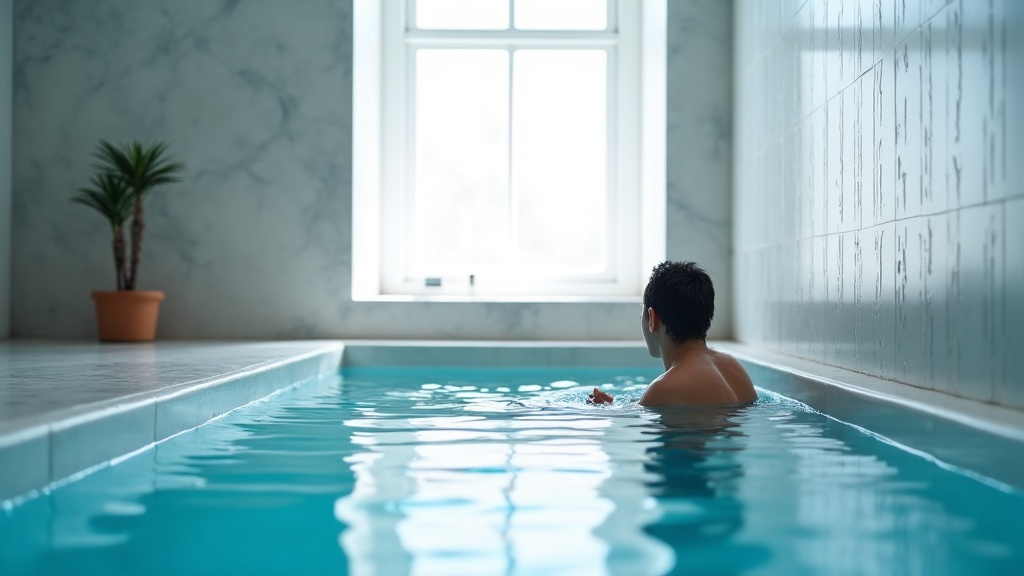
I use cold work like a training tool, not a toughness ritual, and that changes how I answer this question. Cold plunges have gone from niche recovery tool to mainstream wellness ritual, with claims that they can sharpen focus, lower stress, reduce inflammation, strengthen immunity, and improve mood. The scientific picture is more restrained. There is some evidence that cold-water immersion may help with a few specific outcomes, especially short-term stress regulation and post-exercise recovery, but many of the broad health claims remain ahead of the research.
What the evidence supports
The strongest recent overview comes from a 2025 systematic review and meta-analysis in PLOS One that examined 11 studies involving 3,177 healthy adults. It found that cold-water immersion was associated with lower stress about 12 hours after exposure, along with possible improvements in sleep quality and quality of life in some studies. But those benefits were not consistent across every outcome or every time point, and the overall evidence base was still limited by small trials, uneven methods, and a lack of diverse participants.
That matters because a cold plunge creates an immediate stress response, not an instant state of calm. Right after immersion, the body reacts with a surge in breathing, heart rate, blood pressure, and stress hormones. In the same review, inflammation markers actually rose immediately and one hour after exposure. That does not necessarily mean cold plunges are harmful in all contexts, but it does challenge the simple marketing claim that they automatically “reduce inflammation.”
Where cold plunges may help
For athletes, cold-water immersion has a better-established role in recovery than in general wellness. Separate sports research suggests it can reduce soreness and improve the feeling of recovery after hard exercise. That said, even here there is a tradeoff: frequent use after strength training may blunt some long-term muscle and power adaptations. In other words, a cold plunge may help you feel better sooner, but that does not always mean it helps you train better over time.
Outside sports, the most plausible benefit is that cold exposure may act as a controlled physical stressor. Some people report feeling more alert, more resilient, or mentally refreshed afterward. Researchers think this could be related to changes in the nervous system and stress-response pathways. But the data are not strong enough to conclude that cold plunges reliably treat anxiety, depression, burnout, or immune weakness in the general population.
Where the hype gets ahead of science
Several popular claims remain weakly supported. There is not good evidence that cold plunges “boost” the immune system in a clear, clinically meaningful way. Some studies show temporary changes in immune markers, but those shifts do not automatically translate into fewer illnesses. Likewise, evidence for mood improvement is mixed, and some of the most enthusiastic reports may reflect other factors, such as exercise, group activity, outdoor exposure, expectation, or placebo effects.
That distinction is important. If someone feels better after a cold plunge, the experience may still be useful to them. But from a scientific standpoint, it is difficult to separate the effect of the cold itself from the effect of ritual, social connection, or the sense of doing something hard on purpose.
The biggest issue: safety
Cold plunges are not risk-free. Sudden exposure to very cold water can trigger a cold shock response, including involuntary gasping, rapid breathing, elevated blood pressure, and increased strain on the heart. The American Heart Association has warned that this response can be dangerous, especially for people with cardiovascular disease or anyone who submerges too quickly. There is also a real risk of hypothermia, dizziness, loss of coordination, and in open water, drowning.
People with heart conditions, uncontrolled blood pressure, circulation problems, a history of fainting, or other significant medical issues should not assume a cold plunge is benign. Pregnant people and anyone taking part in unsupervised open-water plunges should be especially cautious. Scientific uncertainty is one thing; avoidable risk is another.
So, do cold plunges have scientific benefits?
Yes, but the benefits appear narrower and less dramatic than the wellness industry often suggests. Cold plunges may help with short-term stress reduction later in the day, may support post-exercise recovery, and may modestly improve sleep or perceived well-being in some people. But the evidence does not justify sweeping claims that they boost immunity, cure inflammation, or serve as a proven mental health treatment.
The most accurate conclusion is that cold plunges are promising, not proven. If someone enjoys them, tolerates them well, and uses them carefully, they may be a reasonable wellness practice. But they are not magic, and they are not a substitute for the fundamentals that have much stronger evidence behind them: regular exercise, enough sleep, good nutrition, stress management, and appropriate medical care.
What I Think Actually Has Support
- Short-term recovery perception and soreness management after hard training.
- A later-in-the-day drop in perceived stress for some healthy adults.
- A possible alertness or resilience effect that feels real even if it is hard to measure cleanly.
- A much weaker case for big claims around immunity, fat loss, or universal anti-inflammatory effects.
That kind of breakdown helps readers separate practical uses from broad wellness marketing.
If you are trying to make daily cold exposure more controlled instead of more extreme, I would compare cold plunge thermometer and recovery timer because consistency usually improves when you can track the dose instead of guessing at it.
What I Tell Readers Not to Overclaim
I think the cleanest way to talk about cold plunges is to keep the promise narrow. They may improve how you feel, how you rate soreness, and how deliberate your recovery routine becomes. That is different from claiming they transform your metabolism or fix every stress problem in the body.
That distinction matters because the ritual itself can be powerful. People sleep better, feel sharper, or become more consistent with training because the plunge anchors a healthier routine. I do not dismiss that. I just do not want readers mistaking a useful routine effect for bulletproof mechanistic proof.
My Practical Take on the Science
If you want the most honest answer, the evidence supports cautious use for recovery and maybe for perceived stress regulation, while the bigger all-purpose health claims remain underpowered. That still leaves room for cold plunges to be valuable. It just means the value is more specific than the internet usually admits.
That is why I would treat cold exposure like a tool with a job description: use it when you want a controlled stressor, when soreness management matters, or when the ritual helps you show up consistently. Do not hand it credit for benefits that still belong to sleep, training quality, and basic recovery habits.
What I Tell Readers Not to Overclaim
I think the cleanest way to talk about cold plunges is to keep the promise narrow. They may improve how you feel, how you rate soreness, and how deliberate your recovery routine becomes. That is different from claiming they transform your metabolism or fix every stress problem in the body.
That distinction matters because the ritual itself can be powerful. People sleep better, feel sharper, or become more consistent with training because the plunge anchors a healthier routine. I do not dismiss that. I just do not want readers mistaking a useful routine effect for bulletproof mechanistic proof.
What Changes My Answer in Practice
My answer gets more positive when someone is using cold exposure with a clear purpose and a controlled dose. If the goal is to manage soreness during a hard training block, create a repeatable pre-work routine, or use a short stressor that helps them reset mentally, I can see the logic. If the goal is to stack every possible wellness claim onto one habit, the science gets much shakier fast.
I also pay attention to what the plunge is replacing. If someone is using it instead of sleeping enough, eating well, or actually programming recovery days, then the ritual is getting too much credit. If it sits on top of good fundamentals, then it can still be a useful extra even when the headline claims are overblown.
My Practical Take on the Science
If you want the most honest answer, the evidence supports cautious use for recovery and maybe for perceived stress regulation, while the bigger all-purpose health claims remain underpowered. That still leaves room for cold plunges to be valuable. It just means the value is more specific than the internet usually admits.
That is why I would treat cold exposure like a tool with a job description: use it when you want a controlled stressor, when soreness management matters, or when the ritual helps you show up consistently. Do not hand it credit for benefits that still belong to sleep, training quality, and basic recovery habits.
That framing usually protects people from the two biggest mistakes: dismissing cold plunges as useless because they are overhyped, or treating them like a miracle because they feel intense. They are neither. They are a narrow tool that can be worth using when the expectations stay honest.