
Quick answer
Cold Plunge for Mental Toughness: The Psychology Behind the Discomfort
I’ve been running cold plunge protocols for four years, and the single biggest shift I see in athletes isn’t their recovery time or inflammation markers—it’s their relationship with discomfort. Cold plunge mental toughness isn’t about gritting your teeth and enduring pain; it’s about rewiring how your brain responds to stress, one icy minute at a time. The psychology behind cold exposure goes deeper than most people…
Practical takeaway
Cold water immersion triggers a cascade of neurological responses that directly build mental toughness. Within seconds of submersion, your sympathetic nervous system fires up—releasing norepinephrine, cortisol, and adrenaline. Your amygdala (the brain’s fear center) goes into overdrive.
I’ve been running cold plunge protocols for four years, and the single biggest shift I see in athletes isn’t their recovery time or inflammation markers—it’s their relationship with discomfort. Cold plunge mental toughness isn’t about gritting your teeth and enduring pain; it’s about rewiring how your brain responds to stress, one icy minute at a time.
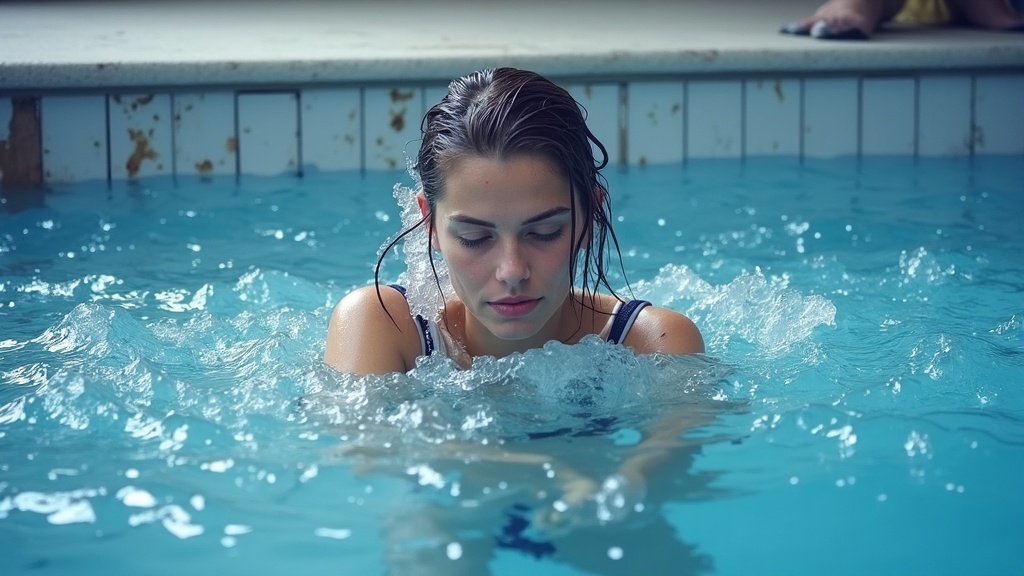
The psychology behind cold exposure goes deeper than most people think. When you step into 50°F water, your body screams at you to get out. Your breath catches, your heart races, your mind floods with panic. But here’s what matters: that same stress response shows up everywhere—in the weight room, in competition, in life. Learning to stay calm in the cold teaches you to stay calm under any pressure.
The Neuroscience of Cold Exposure and Mental Resilience
Cold water immersion triggers a cascade of neurological responses that directly build mental toughness. Within seconds of submersion, your sympathetic nervous system fires up—releasing norepinephrine, cortisol, and adrenaline. Your amygdala (the brain’s fear center) goes into overdrive.
But here’s the key: when you choose to stay in the cold despite that alarm, you’re training your prefrontal cortex to override your amygdala. You’re literally strengthening the neural pathways that let you think clearly under stress instead of reacting emotionally.
What Happens in Your Brain During Cold Exposure
| Time in Cold | Neurological Response | Mental Toughness Benefit |
|---|---|---|
| 0–30 seconds | Acute stress response, norepinephrine spike (200–300% increase) | Learn to control initial panic reaction |
| 30–90 seconds | Vagal tone activation, breathing stabilizes | Practice calm under sustained pressure |
| 2–3 minutes | Dopamine release (up to 250% baseline), endorphin production | Reward system reinforces stress tolerance |
| Post-plunge | Extended norepinephrine elevation (hours), improved focus | Carry confidence and clarity into other challenges |
Research from the European Journal of Applied Physiology shows that regular cold exposure increases baseline norepinephrine levels, which correlates with improved focus, reduced perceived stress, and better emotional regulation—all core components of mental toughness.
Cold Plunge Mental Toughness vs. Traditional Mental Training
I’ve worked with athletes using visualization, meditation, and cognitive behavioral techniques. All valuable. But cold plunge mental toughness training has one massive advantage: the stress is real and immediate. You can’t fake your way through 50°F water.
How Cold Exposure Stacks Up
- Visualization: You imagine a stressor → Brain response is hypothetical
- Meditation: You observe thoughts → Builds awareness but not always resilience under acute stress
- Cold plunge: You face actual physiological stress → Brain must respond in real-time, building genuine stress adaptation
The beauty of cold exposure is that it forces you to practice the exact mental skills you need elsewhere: controlling your breath when your body wants to hyperventilate, staying present when your mind wants to escape, and choosing discomfort when comfort is just one step away.
Building a Cold Plunge Mental Toughness Protocol
Here’s the protocol I use with strength athletes and what I follow myself. It’s progressive, measurable, and focused on psychological adaptation—not just physical conditioning.
Week 1-2: Establishing Baseline Control
- Duration: 60–90 seconds at 55–60°F
- Focus: Breath control (nasal breathing only)
- Mental cue: “I control my breath, not the cold”
- Frequency: 3x per week
Week 3-4: Extending Discomfort Tolerance
- Duration: 2–3 minutes at 50–55°F
- Focus: Staying mentally present (no dissociation)
- Mental cue: “Notice the sensation without reacting to it”
- Frequency: 4x per week
Week 5-8: Advanced Stress Inoculation
- Duration: 3–5 minutes at 45–50°F
- Focus: Active problem-solving (run through workout plans, strategy sessions)
- Mental cue: “I think clearly under pressure”
- Frequency: 5x per week
Track your sessions. I use a simple notebook: date, water temp, duration, pre-plunge anxiety (1-10), post-plunge mental clarity (1-10). The data tells you whether you’re actually building resilience or just torturing yourself.
The Transfer Effect: Where Mental Toughness Shows Up
After 12 weeks of consistent cold exposure, here’s what I see athletes report (and what I’ve experienced personally):
- Training: Increased willingness to push through the last brutal set
- Competition: Less pre-game anxiety, better focus under pressure
- Recovery: More patience with the healing process after injury
- Daily life: Improved response to unexpected stressors (traffic, conflict, deadlines)
One D2 linebacker I coached started cold plunging in the off-season. Six months later, he told me the biggest change wasn’t his inflammation or soreness—it was that he stopped panicking when plays broke down. Cold plunge mental toughness transferred directly to game-time decision-making.
Equipment That Supports Mental Training
You don’t need fancy equipment to build mental toughness, but the right setup helps you focus on the psychology instead of fighting logistics.
For consistent temperature control and ease of use, I recommend a cold plunge tub with built-in chiller. Stable water temperature removes variables, letting you track genuine mental adaptation instead of guessing whether today’s session was harder because you’re weaker or because the ice melted.
If you’re starting with a DIY setup, grab a livestock water trough and a floating pool thermometer. Track your temps precisely—mental toughness training requires consistency, and you can’t build consistency if your water is 55°F one day and 48°F the next.
Common Mental Traps (and How to Avoid Them)
1. Ego-Driven Duration
Staying in longer doesn’t always mean you’re tougher. If you’re dissociating or white-knuckling through 10 minutes, you’re not training mental toughness—you’re training avoidance. Stay present, stay controlled, stay purposeful. Quality over duration.
2. Inconsistent Practice
Mental adaptation requires repetition. Plunging once a week when you “feel like it” won’t build resilience. Treat it like strength training: progressive, consistent, tracked.
3. Ignoring Recovery Signals
Cold exposure is a stressor. If you’re already overtrained, under-slept, or dealing with illness, adding more stress won’t build toughness—it’ll break you down. Mental toughness includes knowing when to back off.
The Breath-Control Foundation
Here’s the non-negotiable: if you can’t control your breath in the cold, you’re not building mental toughness—you’re just practicing panic.
Before you add duration or drop temperature, master this sequence:
- Pre-plunge: 5 deep nasal breaths (4-count in, 6-count out)
- Entry: Slow, controlled nasal breathing (no gasping)
- First 30 seconds: Focus entirely on extending your exhale
- After 30 seconds: Settle into rhythmic 4-4 breathing (4-count in, 4-count out)
- Exit: Maintain controlled breathing as you step out
Breath control activates your parasympathetic nervous system (rest-and-digest), which directly counteracts the sympathetic stress response. It’s the difference between surviving the cold and training your brain to stay calm under pressure.
Measuring Progress Beyond the Plunge
Mental toughness isn’t just what happens in the tub. Track these markers to see if your training is transferring:
- Morning anxiety: Rate your pre-day stress level (1-10) weekly
- Training intensity: How often do you back down from a hard set vs. push through?
- Response to setbacks: Time it takes to mentally reset after a bad lift, missed goal, or unexpected problem
- Sleep quality: Improved stress regulation often shows up as deeper sleep
If your cold plunge mental toughness isn’t showing up in these areas after 8-12 weeks, you’re doing it wrong. Either you’re not present during the practice, or you’re overdoing the stress and sliding into chronic activation.
Frequently Asked Questions
How long does it take to build mental toughness with cold plunging?
Most people notice psychological shifts within 2-3 weeks of consistent practice (4-5 sessions per week). Genuine resilience—the kind that transfers to other stressors—usually solidifies around the 8-12 week mark. This isn’t instant gratification; it’s neural remodeling.
Can you build mental toughness with cold showers instead of plunges?
Cold showers help, but they’re not equivalent. Full-body immersion creates a more intense stress response and forces you to stay with the discomfort (you can’t just move away from the cold stream). If a cold plunge setup isn’t accessible, showers are better than nothing—but expect slower adaptation.
What temperature is best for mental toughness training?
50-55°F is the sweet spot for most people. Cold enough to trigger a genuine stress response, warm enough that you can stay present and practice control. Going colder doesn’t automatically make you tougher—it just makes it harder to avoid panic mode.
Should I do cold plunges before or after training?
For mental toughness training specifically, timing matters less than consistency. That said, I prefer morning plunges on non-training days—you get the norepinephrine boost without interfering with muscle adaptation. If you plunge post-workout, wait at least 4 hours to avoid blunting hypertrophy signaling.
Is cold plunge mental toughness training safe for everyone?
No. If you have cardiovascular issues, uncontrolled hypertension, or a history of cold urticaria, consult a physician before starting. Acute cold exposure is a significant stressor—respect that. Mental toughness training doesn’t mean ignoring your body’s legitimate warnings.
Safety / watch-out
The psychology behind cold exposure goes deeper than most people think. When you step into 50°F water, your body screams at you to get out. Your breath catches, your heart races, your mind floods with panic. But here’s what matters: that same stress response shows up everywhere—in the weight room, in competition, in…