
Disclosure: This post contains affiliate links. If you purchase through our links, we may earn a small commission at no extra cost to you.
Commercial cold plunge tubs cost anywhere from $1,000 to $10,000. Mine cost $180, has been running for two years, and I use it five days a week. As a cold exposure coach, I’ve helped dozens of clients build DIY cold plunges, and the results consistently outperform what people expect from a budget build.
This guide walks you through every option I know for building a DIY cold plunge for under $200, from the simplest livestock trough setup to a slightly more sophisticated insulated build that holds temperature better between uses.
The Core Challenge: Temperature
Before spending anything, understand the fundamental challenge: getting water cold enough and keeping it cold enough. Without active cooling, your water temperature depends entirely on your ambient environment. In most homes:
- Cold tap water: 45–65°F depending on season and geography
- Outdoor overnight ambient: achieves 45–55°F in winter/fall in most US climates
- Indoor ambient: water warms to room temperature within hours
The DIY approaches below are ranked from cheapest to most effective at maintaining cold temperatures without an active chiller.
Option 1: Chest Freezer Cold Plunge ($80–$150)
This is the gold standard of DIY cold plunges. A used chest freezer from Facebook Marketplace or Craigslist (100–150-quart capacity) runs $50–$100. Fill it with water. Plug it in and set to its coldest setting, which on most chest freezers tops out around 32–35°F (you’ll dial it to 50–55°F for immersion). Add a digital temperature controller like the Inkbird ITC-308 ($35) to regulate precisely between 45–55°F and prevent it from actually freezing solid.
Budget breakdown:
- Used chest freezer: $50–$100
- Inkbird temperature controller: $35
- Submersible pump (optional, for circulation): $15
- Total: $100–$150
Electricity cost: approximately $15–$25/month depending on your utility rate and the freezer’s efficiency. This is the cheapest cold plunge to operate year-round.
Pros: Precise temperature control, works in any climate year-round, lid keeps water clean, no ice needed ever.
Cons: Requires a 110V outlet; old freezers may have rust issues (seal the interior with food-safe epoxy or line with a vinyl pool liner).
Option 2: Stock Tank / Livestock Trough ($120–$180)
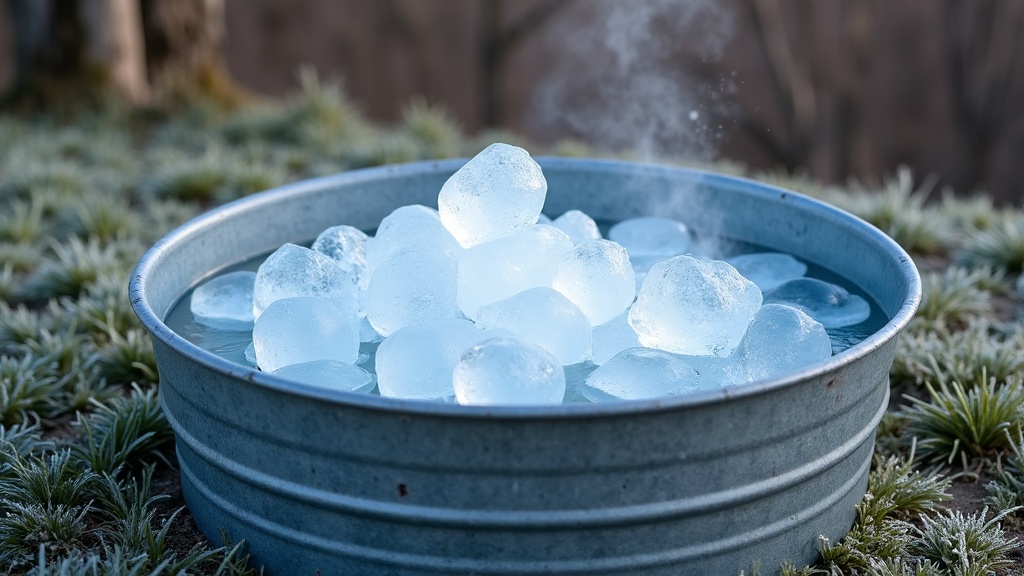
A galvanized steel stock tank (100+ gallons, typically used for watering livestock) is the most popular DIY cold plunge vessel. They’re durable, large enough for full-body immersion, and look surprisingly good with minimal modification.
- Galvanized stock tank, 150 gallons: $120–$180 new, $50–$100 used
- Submersible pump + filter: $20–$40
- Drain fitting: $8
Temperature strategy for a stock tank: place it outdoors in a shaded area (shade dramatically slows warming). In winter climates, ambient temperatures keep the water cold enough without ice. In summer, you’ll need ice (10–20 lbs per session, $2–4) or a small in-line chiller.
I helped one client build this exact setup in a covered back porch — the thermal mass of 150 gallons of water plus overnight ambient cooling kept the water at 52–58°F throughout Pacific Northwest summers with zero ice use.
Option 3: HDPE or Rubbermaid Stock Tank ($80–$120)
For apartment dwellers or anyone who can’t store a large outdoor vessel, a 100-gallon HDPE stock tank ($80–$100 at rural supply stores like Tractor Supply) fits in a shower, on a deck, or in a spare room. HDPE is lighter than galvanized steel, doesn’t rust, and is easier to move.
The limitation is insulation: plastic tanks lose temperature faster than steel ones. You can significantly improve performance by wrapping the exterior with reflective foam pipe insulation ($15–$25) and using an insulated cover.
Water Hygiene: The Part Everyone Underestimates
Stagnant cold water in a plunge tub becomes a biohazard within days without proper management. You have three options:
Option A: Full Water Change
Drain and refill the tub every 3–5 days. Simplest and cleanest, but wasteful (100+ gallons per change) and means re-chilling each time.
Option B: Chlorine/Bromine Treatment
Treat like a spa: maintain 2–4 ppm free chlorine or 4–6 ppm bromine. Test strips run $8 for 50 strips. Add liquid chlorine or bromine tablets as needed. Most plunge users change water every 2–4 weeks with this method. Note: chlorine off-gassing in an enclosed space (like a shed) can be unpleasant.
Option C: UV Sterilizer + Filtration Pump
A submersible pump circulating water through a small UV sterilizer kills bacteria without chemicals. Setup costs $40–$60 (pump + UV unit) but extends water change intervals to monthly or longer. This is my preferred setup — the Aquatop CF series canister filter handles both circulation and UV in one unit.
Step-by-Step: Building the Chest Freezer Cold Plunge
- Source your freezer: Look for a 7–14 cubic foot chest freezer on Facebook Marketplace. Test that it cools before buying.
- Inspect and seal interior: Check for rust. Any rust spots should be sanded, treated with a rust converter, and coated with food-safe epoxy. Alternatively, drop in a vinyl pool liner ($20) for a clean barrier.
- Install drain fitting: Drill a 1″ hole near the bottom of the freezer wall, insert a PVC bulkhead fitting. Run a drain line to your utility drain or outside. This makes water changes effortless.
- Wire the temperature controller: The Inkbird ITC-308 plugs inline between the wall outlet and the freezer. Set your desired temperature (I use 52°F) and it cycles the freezer on/off to maintain it precisely.
- Add circulation (optional but recommended): A small submersible pump keeps water moving, which feels colder on the skin, prevents stratification, and deters algae growth.
- Fill and cool: Fill with tap water. The freezer will reach target temperature in 4–8 hours depending on starting water temp.
FAQ: DIY Cold Plunge Build
How much does it cost to run a chest freezer cold plunge per month?
Most chest freezers use 100–400 watts. With the temperature controller cycling it on/off, estimate 3–6 kWh per day = $12–$25/month at average US electricity rates. Far less than the recurring ice cost.
Do I need to add anything to the water?
For a chest freezer build with the lid on: minimal — just 2 ppm chlorine to prevent bacterial growth. For open-top tanks: more aggressive water management with a filter and/or more frequent water changes.
How long can I stay in a cold plunge?
Start with 1–2 minutes and work up gradually over weeks. Research suggests 2–5 minutes at 50–59°F delivers the majority of benefits. There is no meaningful additional benefit beyond 10 minutes for most protocols.
Bottom Line
A DIY cold plunge is genuinely achievable for under $200 — the chest freezer method is the most capable, and the stock tank method is the simplest to implement. The difference between a $150 DIY plunge and a $4,000 commercial plunge is aesthetics and convenience, not therapeutic effectiveness.
Build it this weekend. Three weeks of consistent use will show you whether you want to upgrade or whether the DIY version serves you just fine.
Also read: Cold Plunge vs Ice Bath — What Science Actually Says About Temperature and Duration