
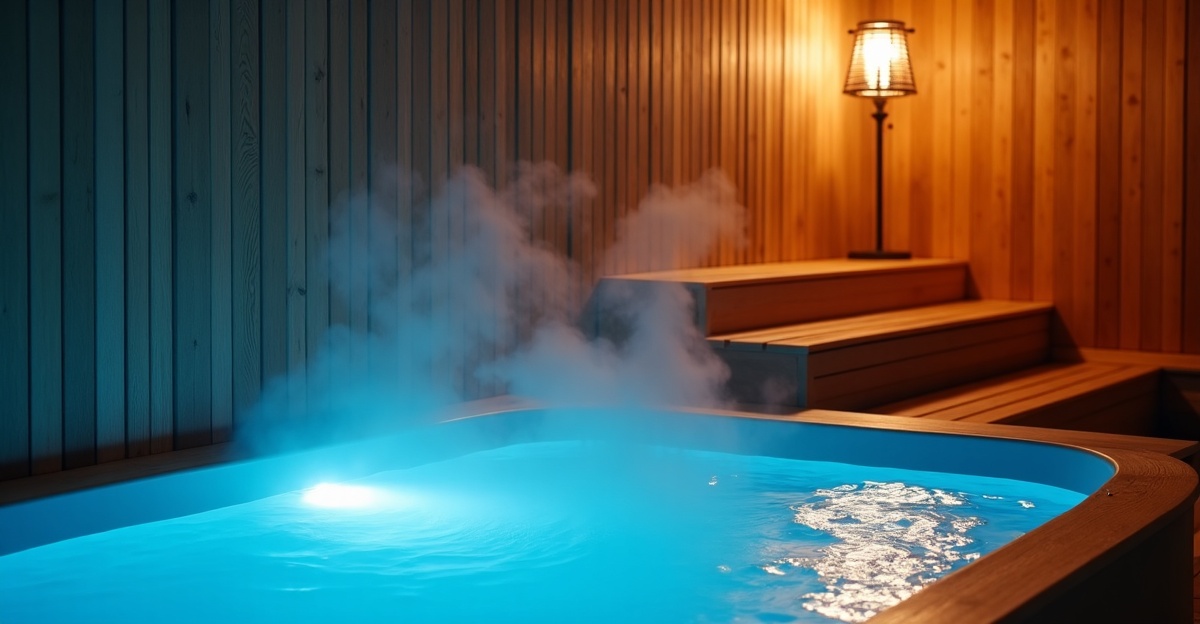
You’ve got a sauna. You’ve got a cold plunge. Now the question everyone asks: cold plunge or sauna first? The answer isn’t arbitrary — the order you use them directly affects your hormonal response, recovery outcomes, and how your nervous system adapts. Get the sequence right and you amplify both. Get it wrong and you potentially undercut your results.
I’ve been pairing cold and heat for three years. I’ve experimented with every combination, read the research, and interviewed coaches who work with elite athletes. Here’s what actually works — and why.
What Happens Physiologically in Each
The Cold Plunge Response
When you enter cold water (under 60°F), your body triggers a cascade of immediate responses:
- Cold shock: A gasp reflex activates. Heart rate spikes. Breathing becomes rapid and shallow.
- Vasoconstriction: Blood vessels near the skin constrict dramatically, shunting blood to core organs. This is what you feel as that initial squeeze.
- Norepinephrine surge: Studies show a 200–300% increase in norepinephrine — a neurotransmitter and hormone responsible for focus, mood, and energy. This is what drives the cold plunge high.
- Sympathetic nervous system activation: The cold triggers a stress response that, when repeated consistently, trains your body to handle stress more efficiently.
- Metabolic boost: Brown adipose tissue (brown fat) activates to generate heat, burning calories in the process.
The overall effect: acute alertness, elevated mood, reduced inflammation, and a long-lasting increase in baseline energy.
The Sauna Response
Heat exposure works through different, but complementary mechanisms:
- Vasodilation: Blood vessels expand. Blood flow to skin and muscles increases significantly.
- Core temperature rise: Sustained heat exposure elevates core temp, triggering heat shock proteins that help repair and protect cellular proteins.
- Growth hormone release: Research shows that heat stress can trigger significant growth hormone spikes — relevant for recovery and muscle maintenance.
- Parasympathetic shift: Despite the initial stress, sustained sauna use tends to activate the parasympathetic nervous system over time, promoting relaxation and recovery.
- Cardiovascular adaptation: Repeated heat exposure mimics some benefits of aerobic exercise — improved cardiovascular efficiency, lower resting heart rate, and better endothermic regulation.
The overall effect: deep muscular relaxation, improved circulation, detoxification via sweat, enhanced recovery, and a mood boost via beta-endorphin release.
Cold After Sauna: The Nordic Cycle
The Nordic tradition — heat, cold, rest, repeat — has existed for centuries across Finland, Scandinavia, and Russia. Modern science has started catching up with why it works so well.
What Happens in the Sequence
When you exit the sauna and enter a cold plunge, your body goes from maximum vasodilation to rapid vasoconstriction within seconds. This dramatic vascular shift:
- Drives blood out of the periphery and back to core organs, helping flush metabolic waste from muscle tissue more efficiently than passive cooling
- Creates a powerful contrast effect — the combination of relaxed muscles from heat plus the norepinephrine hit from cold produces a uniquely euphoric state
- Ends the session in a state of heightened alertness if you finish with cold, or deep relaxation if you finish with heat
The Recovery Advantage
For athletes using the sauna post-workout for muscle recovery, finishing with a cold plunge may provide additive benefits: heat initiates the recovery cascade (blood flow, protein synthesis signals), while cold reduces acute inflammation and speeds the return of normal tissue function.
Potential Downside: Blunting Hypertrophy
If your primary goal is muscle building, finishing with cold immediately post-strength training may blunt the inflammatory response that signals muscle protein synthesis. The conservative approach for hypertrophy-focused athletes: skip the cold plunge on heavy lifting days or wait 4+ hours after training before cold exposure.
Sauna After Cold Plunge
Less traditional, but increasingly popular — especially among biohackers who want to end their session in a parasympathetic (relaxed) state rather than the sympathetic (alert) state that cold leaves you in.
When Ending with Heat Makes Sense
- Evening sessions: If you’re using contrast therapy in the evening, ending with sauna — which raises then allows core temperature to drop — is conducive to sleep. The post-sauna temperature drop mimics the core cooling that normally precedes sleep onset.
- Injury recovery: Heat post-cold can help prevent the excessive stiffness that sometimes follows prolonged cold exposure, particularly for older athletes or those recovering from joint injuries.
- Chronic stress states: If you’re already running high on cortisol, ending with cold adds more sympathetic load. Ending with sauna may be a better fit for highly stressed individuals.
The Sequence
Cold plunge (10–15 min at 50–59°F) → rest 5 min → sauna (15–20 min at 180–200°F). End with 5 minutes of slow breathing in the sauna. This sequence produces a notable state of calm alertness that many practitioners prefer for creative work or evening wind-down.
What the Research Says
- A 2021 study in the European Journal of Applied Physiology found that contrast water therapy (alternating hot and cold immersion) reduced perceived muscle soreness and improved functional recovery better than cold alone or passive rest after high-intensity exercise.
- Research on sauna bathing has shown significant cardiovascular benefits from regular heat exposure — benefits that may be amplified when paired with cold through more dramatic vascular training.
- Norepinephrine studies (Søberg et al., 2021) demonstrated that specific cold exposure protocols — particularly those that cause shivering and rewarming — dramatically increase norepinephrine and dopamine, sometimes for hours after the session.
- Practical caveat: Most studies are small, and the optimal protocol varies by individual. What the research consistently supports is that both modalities have substantial evidence behind them independently, and contrast therapy appears to provide additive benefits for recovery and mental health.
Recommended Protocols by Goal
Goal: Maximum Energy and Focus (Morning)
Protocol: Sauna 15 min → Cold plunge 3–5 min → Done. No rest after cold.
Ending with cold maximizes the norepinephrine spike that carries through your morning. You’ll feel sharp, focused, and energized for 2–4 hours. This is my go-to Monday through Friday.
Goal: Athletic Recovery (Post-Training)
Protocol: Sauna 20 min → Cold plunge 10 min → Rest 10 min → Optional second sauna round (10 min)
Wait at least 1 hour post-strength training before starting. The heat-cold-rest cycle accelerates metabolic waste clearance and reduces next-day soreness. If you’re training for hypertrophy, reduce cold plunge time to 3–5 min or skip entirely on heavy lower-body days.
Goal: Sleep Quality (Evening)
Protocol: Cold plunge 5 min → Rest 10 min → Sauna 20–25 min → Slow cool-down
Ending with sauna followed by passive cool-down produces a natural body temperature drop that cues sleep onset. Avoid vigorous activity after this session. Keep your sauna thermometer calibrated — you want 170–185°F for the evening session, not the 200°F+ you might use for performance-focused daytime sessions.
Goal: Stress Reduction and Mental Health
Protocol: Sauna 20 min → Cold plunge 5–10 min → Sauna 10 min → Rest
The Nordic cycle done twice, ending with heat. This protocol maximizes endorphin release and produces the most profound relaxation response. Think of it as the sauna equivalent of a long run for mood regulation. Ideal on high-stress days or as a weekend ritual.
Goal: Fat Loss and Metabolic Activation
Protocol: Cold plunge first, 10–15 min → Sauna 20 min
Cold activates brown adipose tissue and triggers thermogenesis. Following immediately with sauna continues the metabolic activation. Some biohackers swear by morning cold plunge on an empty stomach specifically for this effect. Check out cold plunge tubs on Amazon if you’re setting up your home protocol.
The Answer: It Depends on Your Goal
If you want the simple answer: sauna first, cold plunge second is the default for most people, most of the time. The Nordic cycle is time-tested, feels incredible, and covers most recovery and performance goals effectively.
But optimal is goal-dependent:
- Morning energy → End with cold
- Evening sleep → End with heat
- Athletic recovery → Heat-cold-rest-heat
- Pure relaxation → Nordic cycle, finish with heat
Experiment for two weeks with each sequence and track how you feel. Your body will tell you what it needs. The research gives you the framework; your experience fills in the variables that are uniquely yours.
The most important thing? You’re doing it. Both modalities have serious science behind them. The combination makes both more powerful. Stop overthinking the order and start building the habit.