
Quick answer
Cold Shower vs Cold Plunge: Real Difference?
Affiliate Disclosure: Ice Basin earns a small commission on purchases made through links on this page, at no extra cost to you. I only recommend gear I'd use myself. People ask me all the time: is the cold shower vs cold plunge debate just semantics, or is there a real physiological difference? The short answer is they're not the same — not even close. Both involve cold water. Both trigger a stress response. But the…
Practical takeaway
Most household cold showers deliver water at 50–70°F depending on your plumbing, season, and geography. In summer, many home showers can't drop below 65°F. Cold plunges, properly set up, operate at 45–59°F — and that 10–20 degree gap isn't cosmetic.
Affiliate Disclosure: Ice Basin earns a small commission on purchases made through links on this page, at no extra cost to you. I only recommend gear I’d use myself.
People ask me all the time: is the cold shower vs cold plunge debate just semantics, or is there a real physiological difference? The short answer is they’re not the same — not even close. Both involve cold water. Both trigger a stress response. But the hormonal cascade, the surface area exposure, and the downstream effects are meaningfully different. If you’re choosing between them based on convenience, that’s fine — but you should make that choice with eyes open about what you’re actually getting.
I’ve been coaching cold exposure protocols for years and researching the physiology behind them. Here’s what the data actually shows.
Temperature: Why the 10–20 Degree Gap Matters More Than You Think
Most household cold showers deliver water at 50–70°F depending on your plumbing, season, and geography. In summer, many home showers can’t drop below 65°F. Cold plunges, properly set up, operate at 45–59°F — and that 10–20 degree gap isn’t cosmetic.
The physiological cold shock response — the gasping, the spike in heart rate, the surge of catecholamines — is dose-dependent. It scales with the speed and magnitude of skin temperature drop. A 65°F shower triggers a noticeable response. A 50°F plunge triggers a qualitatively different one. The cutaneous cold receptors in your skin are firing at a completely different rate. The autonomic nervous system response is stronger, faster, and more sustained.
Research on cold water immersion consistently centers around the 50–59°F range because that’s where the most reproducible hormonal and neurological effects occur. When studies cite dramatic norepinephrine or dopamine increases, they’re almost always measuring full-body immersion at those temperatures — not a lukewarm shower with a cold setting.
Temperature also determines your ability to achieve real cold adaptation over time. Chronic exposure to genuinely cold water — below 59°F — is what drives brown adipose tissue (BAT) recruitment and non-shivering thermogenesis. A shower that never gets below 60°F may not cross the threshold needed for these adaptations to occur.
Surface Area: The Number Nobody Talks About Enough
A standard shower, even with full-body coverage, exposes roughly 20–30% of your skin surface to sustained cold contact at any given moment. Water runs over you; it doesn’t surround you. Your back, your front, your limbs — you can’t have them all under cold stream simultaneously. Some areas warm back up in the time it takes to turn around.
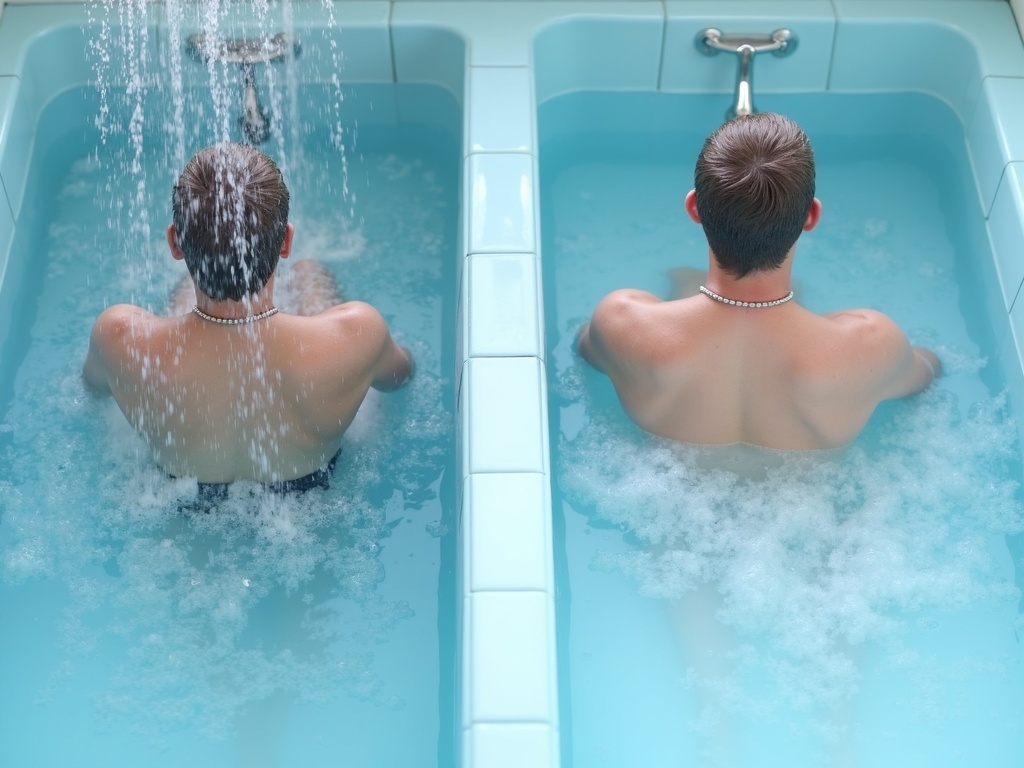
A full cold plunge, by contrast, achieves 80–90% body surface immersion simultaneously. Your legs, torso, arms, and neck are all in contact with cold water at once. This matters for two reasons.
First, the vagus nerve. This massive parasympathetic nerve runs from your neck down through your chest and abdomen. Full submersion — to the shoulders — puts the entire course of the vagus nerve in contact with cold water simultaneously. Partial exposure from a shower doesn’t achieve this. Full vagal stimulation is what drives the deep “reset” feeling many practitioners report after a plunge — the calm, the clarity, the rapid heart rate deceleration after the initial shock.
Second, whole-body cold water therapy has consistently outperformed partial or regional cold therapy in research comparing recovery outcomes. The more surface area exposed simultaneously, the stronger the systemic hormonal response.
Norepinephrine: The 2–3x Difference
Here’s where the gap between a shower and a plunge becomes most quantifiable. Full cold water immersion at 50–57°F has been documented to drive plasma norepinephrine concentrations to 300–500% above pre-immersion baseline. Cold showers, particularly at the temperatures achievable in most homes, produce a fraction of that response.
Research from Huberman Lab’s synthesis of cold exposure studies, drawing on work by investigators including Tipton and colleagues (2017) on cold water immersion physiology, consistently distinguishes full immersion from partial exposure. The thermal load on the body — how quickly and how extensively skin temperature drops — directly determines the magnitude of the sympathetic nervous system response. Showers provide an intermittent, partial thermal load. Plunges provide a sustained, total one.
Norepinephrine isn’t just about feeling alert. It’s your primary driver of focus, fat mobilization, mood elevation, and the “flow state” many cold plungers report during and after immersion. The difference between a 150% norepinephrine increase from a cold shower and a 400%+ increase from a plunge isn’t just quantitative — it’s qualitatively different in how you feel and perform for the next two to four hours.
Practical Outcomes: Which Is Actually Better for What?
Stress Resilience
Both work. Cold showers build real stress tolerance — the act of choosing discomfort voluntarily and controlling your breath through it is genuinely valuable regardless of the medium. But plunges force a more intense stress response, which means you’re training your nervous system under a higher load. If you want faster adaptation, plunges win.
Mood and Mental Clarity
Cold showers deliver a mood boost, primarily through the initial adrenaline spike and modest norepinephrine increase. Cold plunges deliver a stronger, more sustained neurochemical response — particularly the dopamine elevation (documented at 250% above baseline after full immersion) that can persist for two or more hours post-session. For mental clarity and mood, the plunge is more potent per minute.
Metabolism and Fat Loss
Cold showers provide minimal metabolic benefit in isolation — the limited surface area contact and higher water temperatures don’t reliably trigger significant BAT activation. Cold plunges at 50–55°F do drive measurable thermogenic responses, with estimates of 50–150 additional calories burned per session through brown fat activation and shivering thermogenesis. This isn’t a weight loss silver bullet, but it’s real.
Muscle Recovery
Full immersion wins decisively here. The research on cold water immersion for delayed-onset muscle soreness (DOMS) reduction is largely based on ice bath studies, not cold showers. The circumferential compression from water pressure, combined with full-body temperature reduction, drives the anti-inflammatory and recovery effects. A cold shower after a hard training session helps; a 5-minute plunge helps more.
The Honest Answer: Cold Showers Are a “Lite” Version
I’m not going to tell you cold showers are useless — that would be wrong. A large Dutch RCT (3,018 participants) showed that regular cold showers produced a 29% reduction in sick days compared to controls. Cold showers build a daily habit, improve mood, reduce hesitancy around cold, and have real, documented benefits.
But they are a lite version of cold plunging. If cold plunging is espresso, cold showers are drip coffee — same basic category, but different intensity and effect. The physiological mechanism is similar; the dose is lower. For someone starting out, limited by budget, or without space for a dedicated plunge setup, cold showers are a legitimate tool. For someone who’s adapted and wants the full hormonal response, cold showers are a floor, not a ceiling.
Cost and Accessibility: The Real Deciding Factor for Most People
Cold showers cost nothing. You already have a shower. This is not a small point — the best protocol is the one you’ll actually do consistently, and zero additional cost and zero setup friction is a real advantage.
Cold plunges range from ~$100 for a DIY setup to $5,000+ for a premium dedicated tub with integrated chiller. That’s a real commitment. Here’s how to think about the spectrum:
- Free: Cold shower. Real benefits, limited potency.
- ~$100–$180: DIY stock tank. Fill with cold water and ice as needed. Inconsistent temperature but legitimate full immersion.
- ~$200–$500: Stock tank + chiller setup or chest freezer conversion. Consistent temperature, full immersion benefits.
- $1,000–$3,000: Purpose-built cold plunge tub. Temperature control, filtration, aesthetics.
- $3,000–$5,000+: Premium systems with integrated chillers, ozone filtration, digital controls.
DIY Cold Plunge Options: Starting Without Breaking the Bank
The most accessible upgrade from a cold shower is a Rubbermaid or galvanized stock tank — the same livestock troughs used on farms. A 100-150 gallon version provides full-body immersion for most adults. In cooler climates, tap water and 10–20 lbs of ice ($2–$4) gets you to 50–55°F without any equipment.
For year-round consistent temperatures, a Rubbermaid stock tank (~$100–$150) paired with a dedicated chiller is the most cost-effective serious setup. Add a digital water thermometer — non-negotiable if you’re running any kind of protocol. You need to know your actual temperature, not just “cold enough.” And if you’re building up to winter plunges, neoprene gloves and socks let you extend sessions in sub-50°F water by protecting extremities without compromising core and torso exposure.
Who Should Stick With Cold Showers
Cold showers are the right starting point if you:
- Are brand new to cold exposure — build the habit and tolerance before investing in equipment
- Live in an apartment with no outdoor space or storage for a tub
- Are on a tight budget — spend zero dollars until you know you’ll stick with it
- Have cardiovascular concerns — the cold shock response is intense in a plunge; work up gradually
- Want a quick 5-minute morning routine — showers integrate more easily into existing habits
My recommendation for beginners: commit to 30 consecutive days of cold showers, ending each shower with 60–90 seconds of cold as cold as your tap goes. If you’re still doing it at day 30, consider upgrading.
Who Should Upgrade to a Cold Plunge
You’re ready to make the jump if you:
- Have plateaued on cold showers — the stimulus has become comfortable and you’re not getting the same response
- Are following a serious protocol — the Huberman-style 11+ minutes per week of cold exposure is much easier to accumulate via plunge
- Are using cold for athletic recovery — the data for DOMS reduction is based on immersion, not showers
- Want the full neurochemical response — if mood, focus, and dopamine elevation are your primary goals, the plunge delivers more per minute
- Have the space and budget — even a $100 stock tank is a meaningful upgrade
Frequently Asked Questions
Can cold showers replace cold plunges?
For beginners and those without access to a plunge setup, yes — cold showers are a legitimate tool with real benefits. For serious practitioners targeting the full hormonal response (norepinephrine, dopamine elevation, brown fat activation), no. Cold showers are a reduced-dose version of the same stimulus.
How cold does a shower need to be to have benefits?
Any temperature significantly below your body temperature will trigger some response. The colder the better, up to a point — most household showers max out their benefit around 55–60°F. The research-backed protocols typically use water at 50–59°F, which is difficult to achieve consistently with a shower in most climates.
What’s the minimum time needed in a cold plunge vs a cold shower?
For a cold plunge at 50–55°F, 2–3 minutes is a minimum effective dose for triggering a measurable norepinephrine response. For cold showers, the lower intensity means you likely need 90 seconds to 3 minutes of cold-only exposure to get a meaningful effect. Both are short — this isn’t a time commitment problem.
Does a cold shower count toward the “11 minutes per week” protocol?
Andrew Huberman’s 11 minutes/week cold exposure recommendation is based on research using cold water immersion, not showers. Cold showers can contribute to weekly cold exposure volume, but the reduced intensity means you’d need more time to achieve comparable physiological effects. I’d treat cold showers as partial credit.
Is cold plunging dangerous for beginners?
The cold shock response — gasping, heart rate spike, hyperventilation — is real and can be hazardous if you’re not prepared. Never plunge alone if you’re new. Never submerge your face. Start with temperatures above 55°F and work down over weeks. People with uncontrolled hypertension or known cardiovascular disease should consult a physician before starting. Cold showers are a safer on-ramp because the cold shock response, while present, is less intense.
— Dr. Marcus Webb
Exercise physiologist and cold therapy researcher. I’ve been cold plunging daily for three years and studying the physiological literature behind it. This article is for informational purposes only and is not medical advice. Consult a healthcare professional before starting any new health practice. For more on cold immersion physiology, see Tipton et al. (2017), “Cold water immersion: kill or cure?” in Experimental Physiology, and the Huberman Lab episode on deliberate cold exposure.
Safety / watch-out
Second, whole-body cold water therapy has consistently outperformed partial or regional cold therapy in research comparing recovery outcomes. The more surface area exposed simultaneously, the stronger the systemic hormonal response.